Tuesday, February 18, 2014

Cell Respiration Lab

Yeast Cell Respiration Lab
Introduction: Cell respiration is a process in which the organisms transform glucose and oxygen into carbon dioxide, water, and ATPs. ATPs give energy to the cells to function. Yeasts are a type of fungi. They can respire only in certain environments. With the presence of oxygen and glucose, yeasts can undergo the process of cell respiration.

Equation: C6H12O6 + 6O2 → 6CO2 + 6H2O

Objective:  In order to see the effects of temperature on the rate of cell respiration, we can collect the amount of gas produced by yeasts in different temperatures, given the same amount of time.

Hypothesis: Cell respiration operates faster at a higher temperature due to the intensive movement of particles at a higher temperature.

Materials
1.     Water
2.     Sugar
3.     Yeast
4.     Salt
5.     3 Thermometers
6.     Graduated Cylinders
7.     Scale
8.     Weighing paper
9.     3 Syringes
       3 Test Tubes
       Heating Block
       Ice Box


Procedure:
1.     Measure 3 sets of following materials: 35 mL of water, 1g of sugar, 1g of yeast, and 0.2g of salt
2.     Dump all materials except yeast into each test tube
3.     Dump yeast into each test tube and start the timer
4.     Shake test tubes well
5.     Connect the syringes to the stoppers. Start the syringes at 1mL.
6.     Collect data every 5 minutes

Safety:
1.     Be careful of the fermentation of the yeast. Wash your hands after touching the solution.
2.     Do not put your hands into the heating block
3.     Do not put your hands too long in the ice box

Results:
Time (minutes)
Volume at 5 degrees celcius (mL)
Volume at 18.6 degrees celcius  (mL)
Hot temp 49 degrees celcius  (mL)
0
1
1
1
5
1
1.1
2.6
10
1.1
1.1
4.5
15
1.1
1.2
6.3


Cell Respiration Rates at Different Temperatures

Horizontal Axis: Time (Minutes)
Vertical Axis: Volume (mL)


Conclusion:

According to the graph, the volumes of gas produced in 5 degrees and 18.6 degrees merely changed in the 15 minutes interval. However, the volume of gas produced in 49 degrees raised significantly, almost 6 times larger than the other two. As a result, we have evidence to confirm our hypothesis that cell respiration of yeast runs faster at a higher temperature. One of the main reasons for the pace of cell respiration is the increased motion of particles at a higher temperature.

Standards: SP1/1, SP4/1, SP6/1
I am able to ask questions, post hypothesis, collect and analyze data, and apply scientific principles and evidence to explain phenomena.

Thursday, January 30, 2014

Forensics Quiz

The individual was a 20-year old male. It was found that a bullet traveled through his body. The entrance of the bullet was on the left lateral side above the 3rd rib. The heart located around this region.

The exit was at the umbilical region at the belly button. Since the wound was 5cm deep, the stomach could be hurt.

Another evidence suggests that the bullet traveled 45 degrees downward, leading to the liver of the body. The main function of the liver is to digest food, store energy, and remove poison.

In conclusion, the most plausible cause of death is excessive loss of blood. The evidence suggests that the heart was damaged. Without proper operation of the heart, the blood in the body could not flow throughout the body.

Another plausible diagnosis is that the individual died of poisoning. Since liver was hurt by the bullet, if the individual had poison before the shooting, his body would die out faster without the removal of poison by the liver.

The last plausible conclusion is that the stomach could not digest the food because the stomach was hurt. We need excessive evidence on the condition of stomach to confirm whether the cause of death is from the damage to the stomach.


Monday, January 27, 2014

Cancer

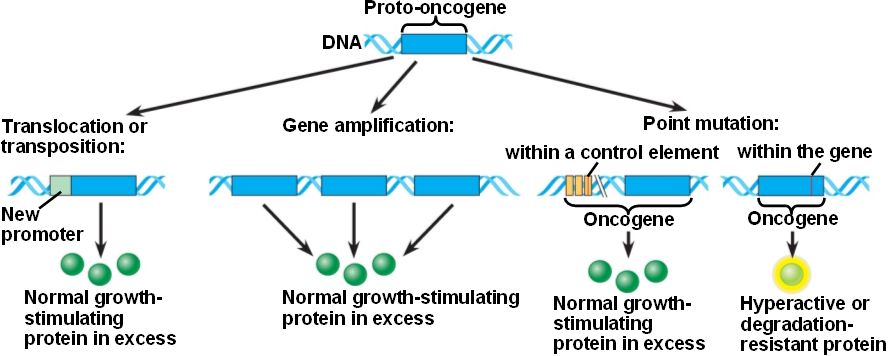
Cancer has always been part of our body. In our DNA, there are genes called proto-oncogenes. If these genes are mutated into oncogenes, they can activate cancer cells to reproduce.


Another cause of cancer is the malfunction of tumor suppressor gene. A tumor suppressor gene is gene that protects a cell from one step on the path to cancer. When these genes mutate, they stop regulating the reproduction of cancer cells.


In order for cancer cells to reproduce, they need a large amount of ATPs. Usually, they absorb and suck those ATPs from other cells so that other cells stop reproducing and the body would slowly die out.


Thursday, January 23, 2014

Question on The Island

In the movie, the cloned human beings have all the features of human beings including memory and emotions. These specific features allow them to become potentially "dangerous" to the company that cloned them. In the future, do you think that it is easier to have clones of human that do not have emotions or memories--simply robots? How can this cloning process be done? Is it ethical to do this?

Monday, January 20, 2014

iPSCs

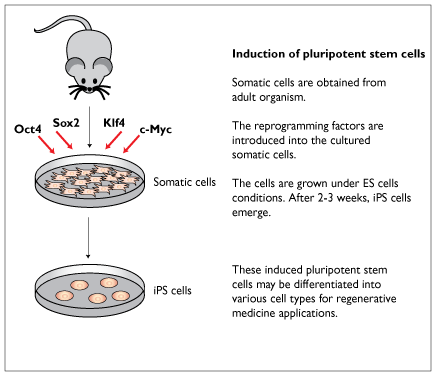
Human cloning has raised several ethic and legal issues. However, the ultimate intention of science is to benefit the entire human population. Konrad Hochedlinger's article on the new findings of iPSCs provides a new great leap in the stem cell research. From scientists' newest discoveries, mature body cells can be reprogrammed into induced pluripotent stem cells to cure many diseases in the future. As we know, some cells in our bodies only divide once and always stuck at G1 phase of the cell cycle. If such cells are destroyed, we can no longer reproduce them. However, if iPSCs are proved to be function in human bodies well in the future, these cells can be reproduced.

As this picture below shows, the cells can be reprogrammed through reprogramming factor genes and become iPSCs.


Sunday, January 5, 2014

Mitosis and Meiosis

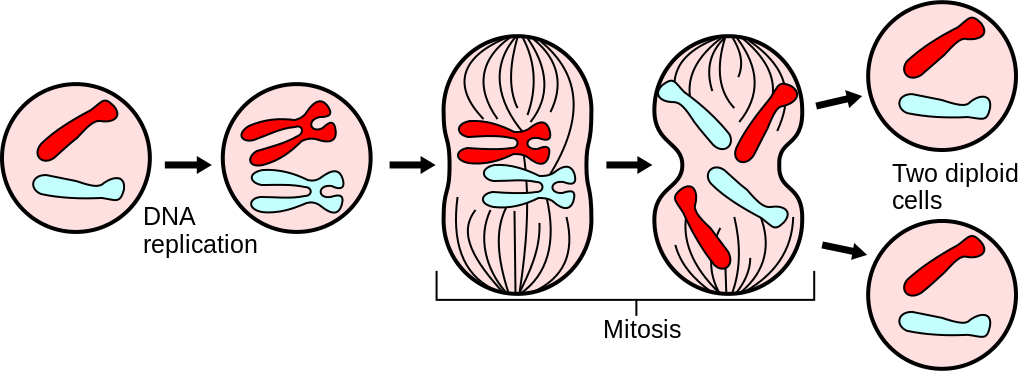
There are two types of cell divisions, mitosis and meiosis.

Mitosis is a process in which two exactly the same cells are reproduced from one.
Meiosis involves two cell divisions that give rise to four gametes (sex cells), each possessing half the number of chromosomes in the original cell.

Mitosis and meiosis are similar in some stages.


Interphase: Interphase (G1 and G2)
Chromosomes are not easily visible because they are uncoiled.

Prophase:
The chromosomes begin to coil.
The spindle apparatus begins to form as centrosomes move apart.

Prometaphase:
The nuclear membrane disintegrates.
Kinetochores form on the chromosomes.
Kinetochore microtubules attach to the chromosomes.

Metaphase:
The chromosomes become aligned on a plane.

Anaphase:
The chromatids separate (The number of chromosomes doubles).

Telophase:
The nuclear membrane reappears.
The chromosomes uncoil.
The spindle apparatus breaks down.
The cell divides into two.

Meiosis

Prophase I
Homologous chromosomes become paired.
Crossing-over occurs between homologous chromosomes.

Metaphase I
Homologous pairs become aligned in the center of the cell.

Anaphase I
Homologous chromosomes separate.

Telophase I
This stage is absent in some species


The second cycle in Meiosis includes the same stages for the first cycle except that they take place in cells with half the chromosomes.